
Paddle Techniques That Actually Work
Master the forward stroke, turning, and braking without exhausting yourself. Real techniques used by experienced river paddlers.
By
Editorial Team
Written by the brixovia editorial team, focused on honest, practical guidance for river kayaking day trips.
Why Technique Matters More Than Strength
You don't need to be super strong to paddle efficiently on a river. In fact, most beginners exhaust themselves because they're using their arms instead of their core. It's not about muscle — it's about using your whole body the right way.
Good technique means you'll paddle faster, go farther, and feel less tired at the end of the day. Your shoulders won't hurt. Your wrists stay healthy. And you'll actually enjoy the trip instead of just surviving it.
The Forward Stroke: Where It All Starts
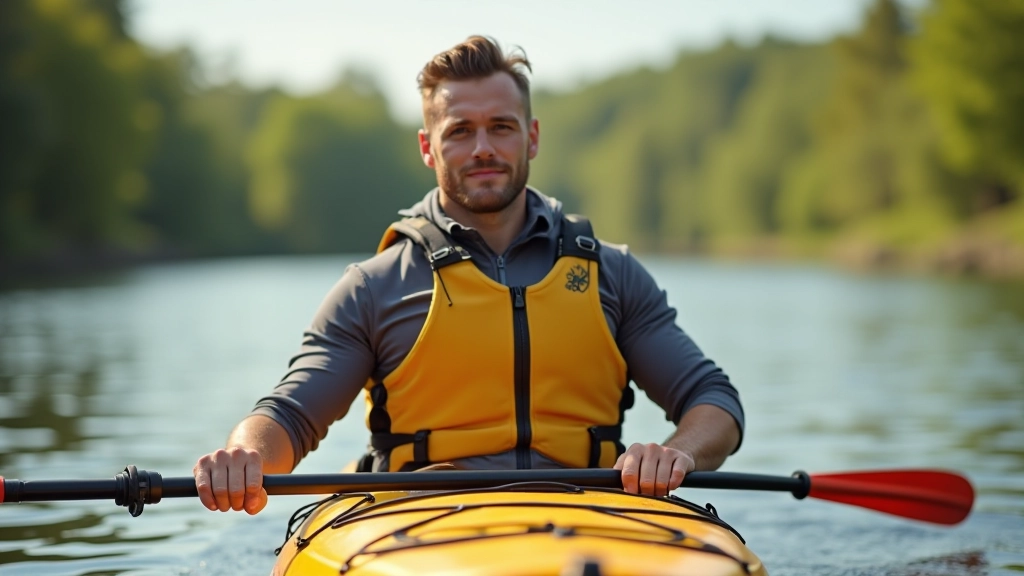
The basic principle: Your paddle should move straight, and your body should rotate — not your arms.
Here's how it actually works. You're not pulling the paddle through the water with your arms. You're rotating your torso. Your core does the heavy lifting. Your arms? They're just connecting your body to the paddle.
Start with the paddle blade fully submerged near your hip. Rotate your shoulders forward — this is the key movement. Your opposite arm stays relatively straight and pushes the grip forward. The blade exits the water at your hip. That's one stroke.
Most beginners make the same mistake. They bend their elbows too much and try to muscle the paddle through the water. That burns out your shoulders in about 45 minutes. We're talking sore muscles for days.
Grip position: Hands shoulder-width apart. Grip should be firm but not white-knuckle tight. Relax your shoulders.
Blade entry: Insert the blade fully into water near your foot. Not halfway. All the way in.
Torso rotation: Rotate from your core, not from your arms. Feel the twist in your abs and back muscles.
Blade exit: Pull the blade out cleanly at your hip. No dragging it back or you'll lose momentum.
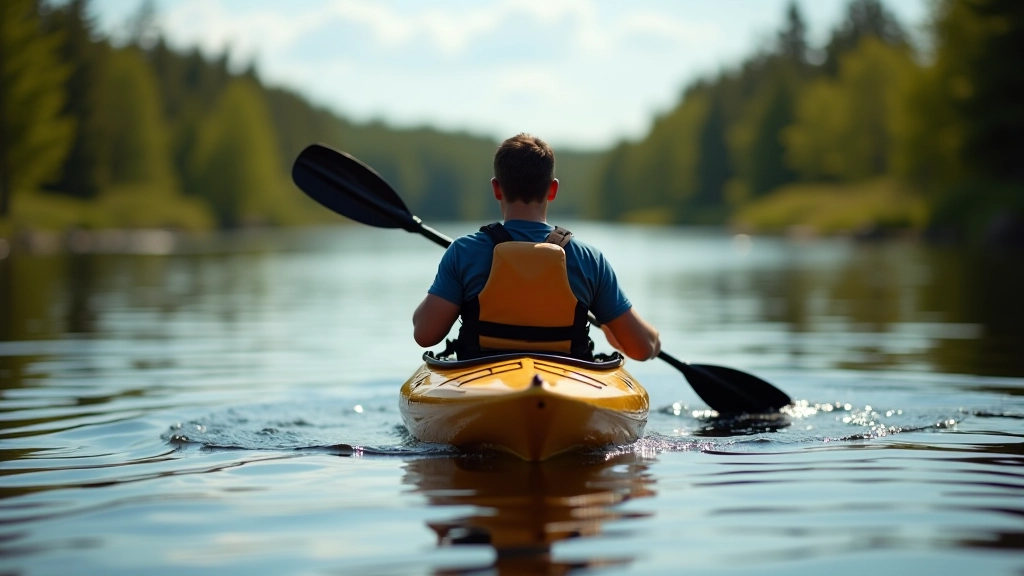
Turning: The Sweep Stroke and Lean
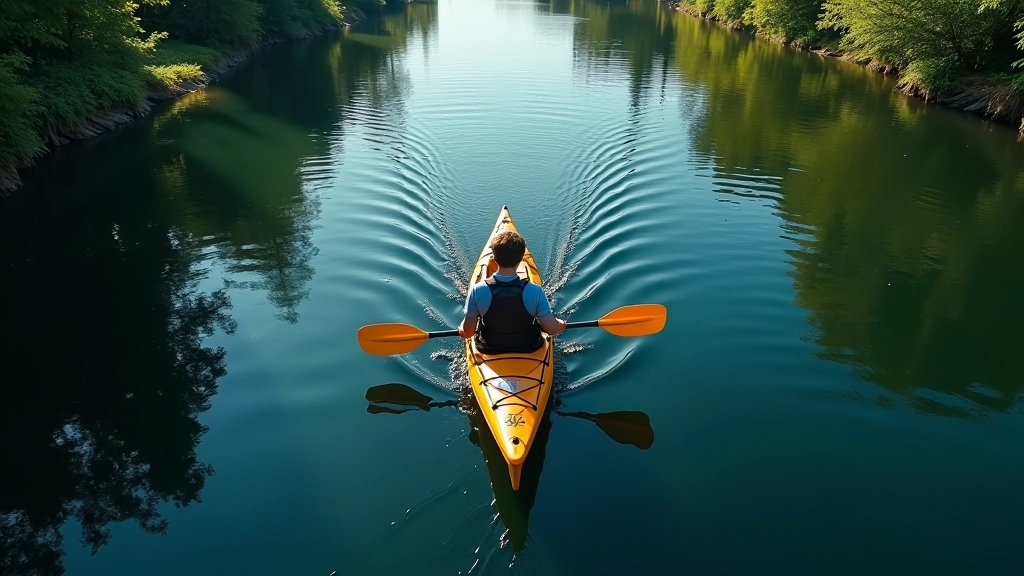
Turning isn't complicated if you understand the two things happening at once: your paddle sweep and your kayak lean.
Key insight: A kayak turns because you're leaning it, not just because the paddle pushes. The lean does 70% of the work.
The sweep stroke is a wide arc with your paddle. You start with the blade near your hip and sweep it out in a wide arc toward the bow (front). This rotates your kayak. But here's the part everyone misses: lean the kayak toward the direction you want to turn. Tip it maybe 15-20 degrees. This makes the turn happen faster and smoother.
Don't panic about tipping. A recreational kayak won't flip from a normal lean. You're in a stable boat. The lean is what makes turning efficient instead of fighting the water.
- Lean the kayak toward your turn direction
- Sweep the paddle in a wide arc away from the boat
- Keep your weight centered — don't lean your upper body far out
- Multiple strokes are fine — one sweep doesn't complete a turn
Stopping and Braking: Control Your Speed
Rivers have current. Some days it's gentle, some days it's a bit stronger. You need to control your speed, which means knowing how to slow down and stop.
The reverse stroke is your brake. Instead of moving the paddle forward, you reverse it. Pull the blade toward the stern (back) of the kayak. This creates resistance and slows you down. It's not the fastest stop, but it's controlled and smooth.
Emergency stop: If you need to stop fast, do multiple reverse strokes on one side, then the other. Switch sides to keep the kayak straight.
For sharper braking, use a combination. A sweep stroke on one side plus a reverse stroke on the other side spins and slows you simultaneously. Takes practice, but it's useful in tight spots.
Here's what we see a lot: beginners try to drag their paddle like an anchor. Don't. That doesn't work well and wastes energy. Use proper strokes — they're more effective.
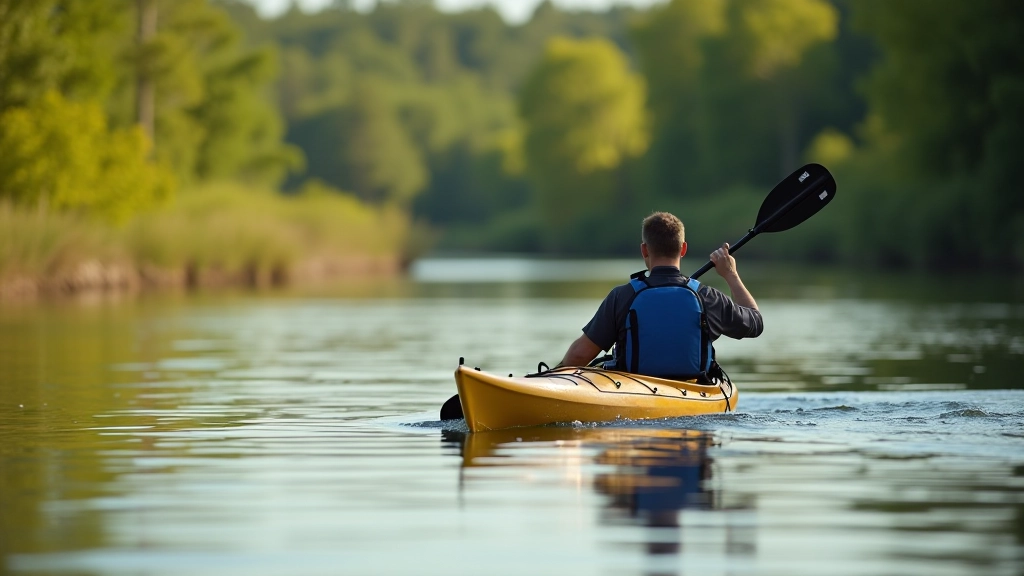
How to Practice Without Frustration
Technique takes time. You won't nail it in one session. That's normal. The good news? You see improvement pretty quickly if you practice with intention.
Start Slow
Practice on calm water first. No current, no obstacles. Just you and the paddle. Get the movement smooth before you add speed or conditions.
Feel the Rotation
Pay attention to your core muscles working. If your shoulders are burning, you're doing it wrong. It should feel like your stomach and back are doing the work.
Repetition Builds Memory
Paddle regularly. Even 20-30 minutes of focused practice beats occasional long sessions. Your muscles remember good technique.
Record Yourself
Use your phone. Film from the side. You'll see things you feel and things you need to fix. It's honest feedback.
Most people see solid improvement in 3-4 outings if they're paying attention. After that, technique becomes automatic and you can focus on enjoying the river.
You're Ready to Paddle Better
The forward stroke, turning, and braking — these three techniques cover 95% of what you'll do on a river. You don't need fancy skills or expensive equipment. You need to understand how your body and paddle work together.
Start with the forward stroke. Get that smooth. Then add turns. Then work on speed control. Build one skill at a time. You'll be surprised how quickly you progress.
The river's waiting. Get out there and paddle.
Important Note
This guide provides general information about paddle techniques for educational purposes. Every paddler's experience varies based on fitness, water conditions, and kayak type. Always wear a personal flotation device (PFD), check weather and water conditions before paddling, and consider taking lessons from certified instructors for hands-on guidance. Paddle safely and within your skill level.
Keep Learning
Explore more guides to improve your river kayaking experience
Getting Started with River Kayaking
Essential skills and safety tips for your first day on gentle river waters. We cover what to expect, basic safety, and how to build confidence.
Read More
Best Lakeside Picnic Stops
Five perfect spots along Aukštaitija routes where you can pull up, rest, and enjoy a meal with a view. Each location offers unique scenery and access.
Read More
What to Pack for a Full Day Trip
The checklist every paddler needs. Water, sun protection, emergency gear, and snacks. We break down exactly what fits and what stays home.
Read More